

How productive is the Albanian economy? Albanians work long hours, but produce only 995 lek per hour

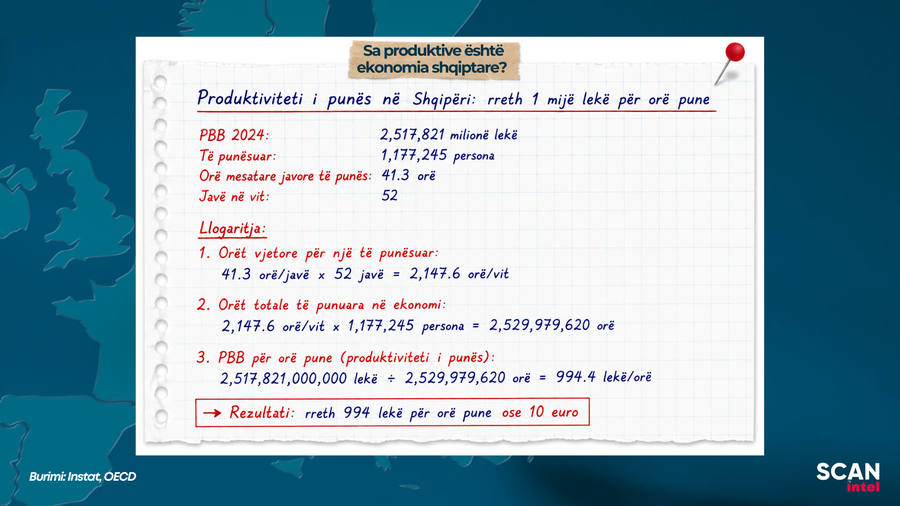
The Albanian economy generated an average of around 995 lek for each hour worked during 2024, according to a calculation based on official INSTAT data on Gross Domestic Product, employment and average working hours.
The data shows that the country's Gross Domestic Product reached 2.517 trillion lekë during 2024, the year with complete data. In the same period, the number of employed people in Albania was 1.2 million, while employees worked an average of 41.3 hours per week.
Based on these indicators, the Albanian economy results in having produced an average of about 995 lek for each working hour during 2024.
The OECD defines labor productivity as the ratio between Gross Domestic Product and the total number of hours worked during the year. So, the calculation is made by dividing Gross Domestic Product by the total number of hours worked during the year, according to the formula used to measure labor productivity.
However, international comparison places Albania far behind the most developed economies. According to the OECD, which measures “Gross Domestic Product per hour worked” this time through the Purchasing Power Parity (PPP) methodology, Albania produces only 17.6 international dollars for every hour worked.
In the world's most productive countries, the gap is much wider. According to the OECD, Ireland leads the way with $151 produced per hour worked, followed by Norway at $132 and Luxembourg at $125. The United States produces $97 per hour worked, while Germany produces $88. The OECD average is $71 per hour worked.
This may be related to the low level of productivity and the structure of the Albanian economy, while economies with higher productivity rely mainly on technology, advanced industry, automation, and sectors with high capital intensity.
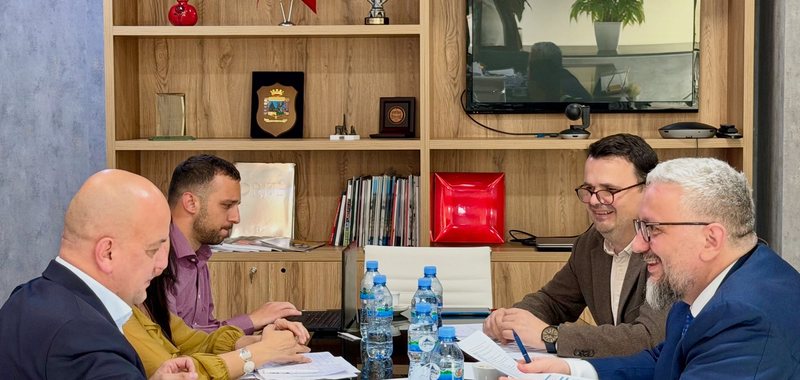
Taxes and the EU discuss the objectives of the Growth Plan and the fight against evasion
The Director General of the Tax Administration, Ilir Binaj, held a working meeting with representatives of the European Union Delegation to Albania, where......
Businesses received 253 million euros in VAT refunds/ 1649 requests were approved, average processing time 31 days
Businesses under the VAT regime have received back 25.3 billion lek or approximately 253 million euros from the state budget in the form of reimbursement......
New energy projects, 2.8 gigawatts - ERE: Need for investments in the transmission network, OST has planned 16 billion lek
Around 2.8 gigawatts of new energy capacity is expected to be added to the Albanian electricity system in the coming years, as projects are increasing......
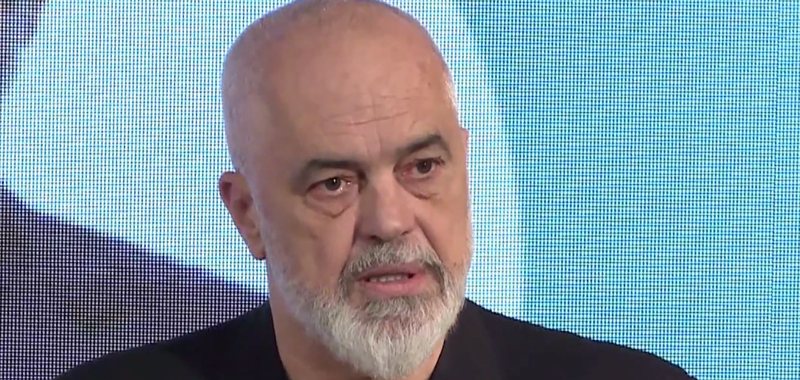
EU4Municipalities II, funding for municipalities - Prime Minister Edi Rama: Human capital, the most acute problem
Local government must increase human capacities in order to adapt to European standards and have the opportunity to attract funds from the union. This was......
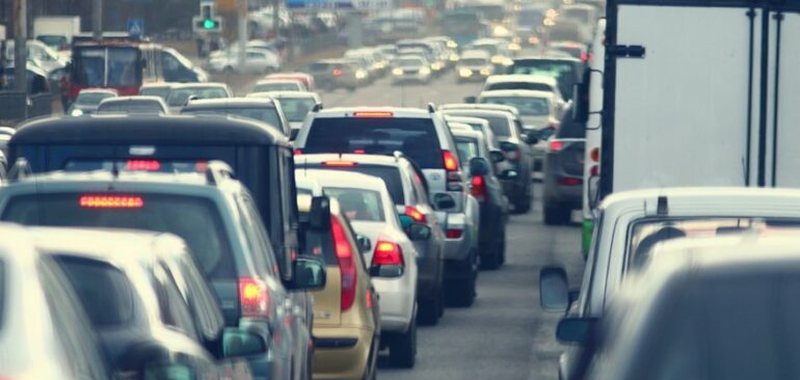
Fewer cars at the border, less income for insurers - AMF: The decline in entries and exits or prices affects the Green Card and border insurance
Insurance companies are not collecting much revenue from the Green Card product and border insurance. For several months in a row, fewer and fewer gross......
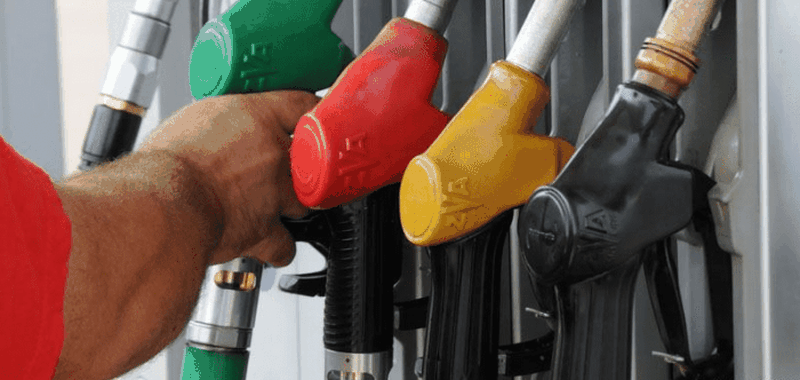
The Transparency Board reduces fuel prices again, oil drops to 193 lek/liter
The Transparency Board has once again decided to reduce fuel prices in the domestic market. At the meeting held on May 8, 2026, new ceiling prices for the......
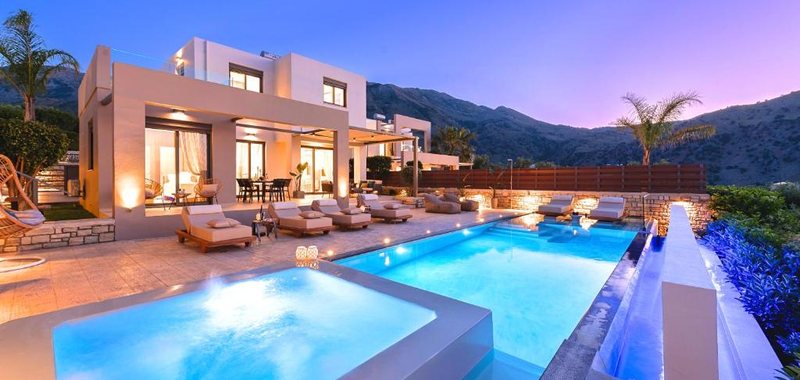
How much are Airbnb owners in Albania expected to earn in 2026? Villas with sea views in the south are reaching up to 4 thousand euros in monthly income
The short-term rental market through Airbnb platforms is gaining more and more weight in Albania, becoming one of the most profitable forms of tourist......
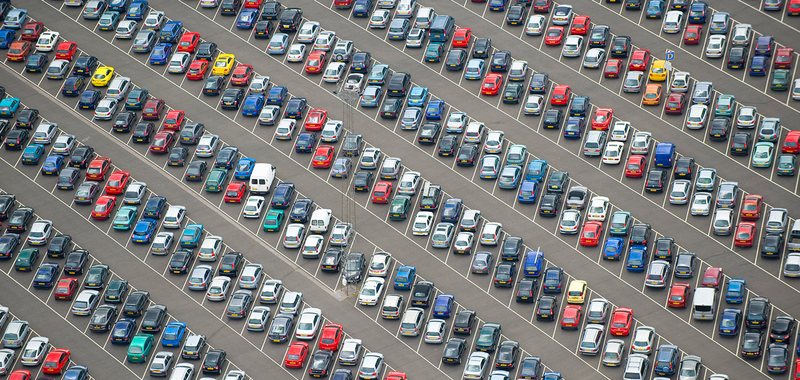
Safety in Corridor VIII and Adriatic-Ionian - Transport Community, study on rest areas and parking
The Transport Community will undertake a regional study to assess the current state of rest areas and safe parking along the TEN-T network in the Western......